Tattoo styles · Dublin
Japanese Tattoos in Dublin
Japanese tattooing draws on the art and folklore of Japan, with subjects such as samurai, dragons, foo dogs, geishas and cherry blossom arranged in bold compositions that flow with the body. At The Bunnieverse, Japanese subjects are often brought together with realism, in colour, on scales from a single piece to sleeves, leg pieces and a back.
Because a Japanese composition is designed around the shape of the body, it’s planned as a whole from the start, even when it’s tattooed over several sessions.
Subjects and composition
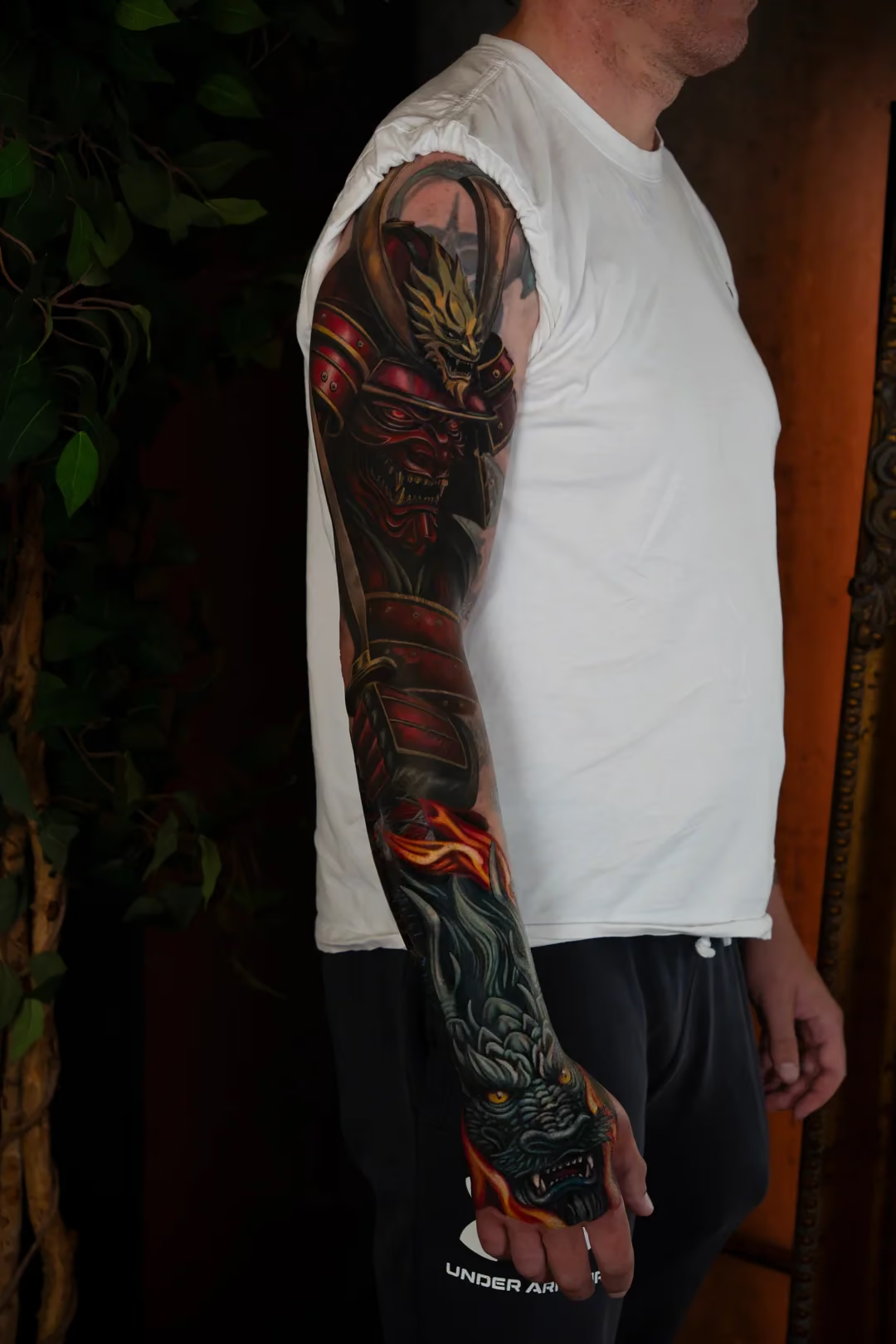
The subjects in our Japanese work come straight from that tradition: a samurai and a shogun, a geisha, a kitsune with spider lilies, a foo dog among cherry blossoms, a dragon with a daruma, a pagoda. If you have a subject in mind, tell us what draws you to it and send references for the parts you love, whether that’s a pose, a palette or a background.
Read moreRead less
Composition matters as much as the subject. A Japanese piece is usually designed as one image that follows the arm, leg or back, with the main subject and its background working together across the whole area. Your artist will talk through how your subject sits within that flow, and how it could connect with anything you might add later.
Many of our Japanese pieces are also realism, rendering traditional subjects with realistic light, texture and depth. If that blend appeals, our realism page shows the wider style.
How a Japanese tattoo comes together here
Tell us your idea Use the enquiry form to share your idea, the references you love, where on the body you’d like it and roughly how big. You can choose an artist or leave it open, and we’ll suggest who suits the idea.
An initial estimate, then your consultation We’ll reply with an initial estimate, and for a larger piece such as a sleeve we’ll also explain the likely stages and how payment is arranged before work begins. At the consultation you and your artist talk through the whole composition: the subject, the background and how it moves with your body.
Your artist’s drawing Your artist goes through the drawing and the placement with you before any tattooing begins.
Session by session Larger Japanese compositions are built over several sittings, and an area needs to heal before more work goes on it. Each session is confirmed once its own deposit is paid, and that deposit comes off the price of the session. When you arrange dates, mention any holidays, travel or sport coming up.
Size, placement and existing tattoos
Many Japanese compositions are large: our portfolio includes arm sleeves, leg sleeves and a back and leg piece. A single subject can also stand on its own. Tell us the area you have in mind, and your artist will talk through the size the subject needs and whether it could grow into a larger piece later. Our sleeve page explains how sleeves are planned.
Read moreRead less
A Japanese composition can also be planned over an existing tattoo: one of the samurai sleeves in our portfolio is a cover-up. The old ink, its density and the skin all affect what a new design can do, so your artist assesses them first and won’t promise full coverage before they have. Our cover-up page explains more.
Caring for a Japanese tattoo
Larger pieces are tattooed in stages, and each stage gets its own aftercare. Your artist chooses the products and method based on the placement and your skin, and you’ll leave with written instructions and a studio aftercare bag. While each part heals, avoid picking, soaking, swimming and direct sun, and wear loose clothing that won’t rub. Our aftercare guide covers the details.
Colour can look different once the skin has healed. Once your tattoo has settled, protecting it from the sun helps it keep its look. Our healed tattoo guide explains more.
Questions you may have
01What is a Japanese tattoo?
A Japanese tattoo draws on the art and folklore of Japan, with subjects such as samurai, dragons, foo dogs, geishas and cherry blossom. They’re usually arranged as one composition that flows with the body, which is a big part of what makes them so striking.
02Does a Japanese tattoo have to be large?
Not at all. Many Japanese pieces are sleeves, leg pieces or back pieces, but a single subject can stand proudly on its own. If you’re not ready for something big, that’s completely fine: your artist will talk through the size your subject needs, and whether it could be extended later if you fall for the style.
03Can Japanese work be combined with realism?
Yes. Many of our Japanese pieces render traditional subjects with realistic light, texture and depth, so you don’t have to choose one love over the other. Send references for both sides of what you’re drawn to, and your artist will talk through how they can come together.
04Can a Japanese tattoo cover an old one?
It can, and one of the samurai sleeves in our portfolio is a cover-up. If an old tattoo has been bothering you, there’s no judgement here. Your artist will look at the old ink and your skin first, and we won’t promise full coverage until they have.
05How many sessions does a Japanese sleeve take?
It depends on the coverage, the detail and any work already on the arm. Your artist will set out the proposed stages at your consultation and keep you updated as the piece develops, so you can enjoy watching it come together.
06How much does a Japanese tattoo cost?
Each Japanese piece is estimated individually, based on the design, the coverage, the detail and the artist. Share your idea and we’ll send an initial estimate, and if you’re planning something larger, we’ll explain the likely stages and how payment works so you can plan with confidence.
07Can I choose my artist?
You can. Add their name to the enquiry form, or leave it open and we’ll suggest the artist we feel suits your idea. Their profiles are full of their work, so have a wander through them first.
Japanese tattoos
Every piece here is a real tattoo by a Bunnieverse artist. Any piece still in progress says so in its title.
Healed Japanese work
Fresh photos show work on the day it was done. The piece in this section is healed, so you can see how the work looks once the skin has settled. We only call a photo healed when that’s documented.
Tell us about your idea
Share your subject, the references you love and the area you have in mind. You don’t need every detail worked out: that’s what the consultation is for.